
As the days grow shorter and the air turns crisp, it’s time to think about tucking your lawn and garden in for the season. A little effort now pays off with healthier grass, sturdier perennials and a much easier start come spring.
Here’s how to prep your outdoor space for the colder months ahead — whether you’re bracing for snow and frozen ground or easing into a milder winter.
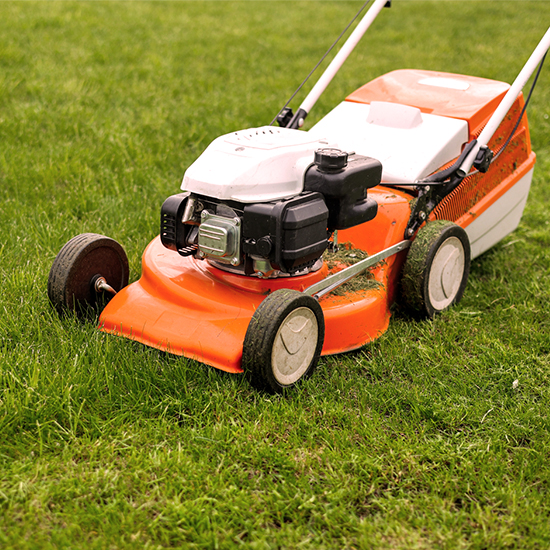
- Lower your mowing height gradually – As fall progresses, gradually bring your mower back down to its normal height. Slightly shorter grass resists matting under snow and fallen leaves, but don’t go too short — overly clipped turf grows fewer roots and opens the door to weeds.
- Aerate and overseed – If your lawn looks thin or compacted, early fall is the time to aerate — pulling small plugs of soil so water, air and nutrients can reach the roots. Pair it with overseeding any bare patches so new grass has a few weeks to establish before frost arrives.
- Feed the roots, not the blades – Apply a slow-release fall fertilizer about six to eight weeks before your first expected frost. This helps grass store energy in its roots over winter, rather than pushing tender new growth that cold weather will only damage.
- Water before the ground freezes – Mulch is one of the best things you can do for a garden bed, but timing matters more than people realize. Its job isn’t to keep roots warm — it’s to keep the ground at a steady temperature. In regions where the ground freezes, hold off on mulching perennials until after that first hard freeze, using a layer of about 3 to 4 inches (roughly 7.5 to 10 cm).
- Mulch at the right time, not just the right way – Mulch is one of the best things you can do for a garden bed, but timing matters more than people realize. Its job isn’t to keep roots warm — it’s to keep the ground at a steady temperature. In regions where the ground freezes, hold off on mulching perennials until after that first hard freeze, using a layer of about 3 to 4 inches (roughly 7.5 to 10 cm).
- Protect vulnerable trees and shrubs – Deep-water trees, shrubs and perennials in the weeks leading up to a hard freeze. Heading into winter dry is one of the most common — and most avoidable — causes of winter plant loss.
- Drain and shut down irrigation systems – Before that first hard freeze, drain hoses, shut off exterior water valves and empty out any irrigation or drip systems. Water left behind can freeze, expand and crack pipes and fittings.
- Clean up with a light touch – Cut back diseased or mildew-prone foliage and dispose of it (don’t compost it), but consider leaving healthy seed heads and stems standing through winter. They provide food for birds and shelter for overwintering pollinators like bumble bees, which nest in loose soil and leaf litter rather than hives.
- Plant spring bulbs – Tulips, daffodils and crocus should go in the ground roughly six to eight weeks before your area’s ground typically freezes, planted about two to three times as deep as the bulb is tall.
If your winters stay mild
Not every yard deals with a hard freeze, and if yours doesn’t, your fall to-do list looks a little different:
- Keep mowing, just less often. Warm-season grasses slow down but don’t go fully dormant, so stick to a longer mowing interval rather than skipping it.
- Skip the aerating and dethatching. Save those tasks for when your grass is actively growing again in spring — doing them now can stress grass that’s already slowing down.
- Don’t stop watering completely. Established lawns generally need about 1 inch/2.5 cm of water a week, including rainfall, tapering to every 10 to 14 days as growth slows.
- Watch overnight lows for tender plants. Tropicals, succulents and other frost-sensitive plants often start to struggle once nighttime temperatures dip below 50°F/10°C, even without a true freeze.
However your winter shapes up, a little prep now means less cleanup — and a much healthier lawn and garden — when spring rolls around.
What’s on your fall lawn and garden checklist? Share your go-to winter prep tips with the Shop Talk community!
Did you know? The science behind mulch timing.
Ever wonder why gardeners say to mulch after the ground freezes, not before? It comes down to something called frost heave. As soil repeatedly freezes and thaws, it forms ice layers underground that physically push plants — roots and all — up and partway out of the ground. Mulching after a hard freeze helps keep the soil at a steady temperature, which is exactly what protects your plants from that freeze-thaw cycle.
You are so very right. You cannot start too early to begin preparing your lawn for winter. We do it in gradual steps to address the type of weather that we are having at the time. Right now we are making sure that the grounds are cleaned, and I am busy cleaning flower and bush areas and making sure that the tree bases are trimmed and cleaned. I know that we try to keep things neat, but we were hit with an abnormal amount of storms and major tree damage everywhere in our subdivision. So now we need to address clean up before we can get back to our lawn and flower areas.
Always thought you aerated in the fall.
I don’t have a lawn
These are some very good tips and I have followed them over the years. I have a pretty decent lawn all though summer.
Most of this is just common sense — and after owning my home and yard for decades, it is like 2nd nature to do certain things at specific times of the year. Especially so since I am in one of those Mild Winter Zones.
Thank you for the tips
I think these are great advice. some of this is didn’t know.
Thanks for information.