
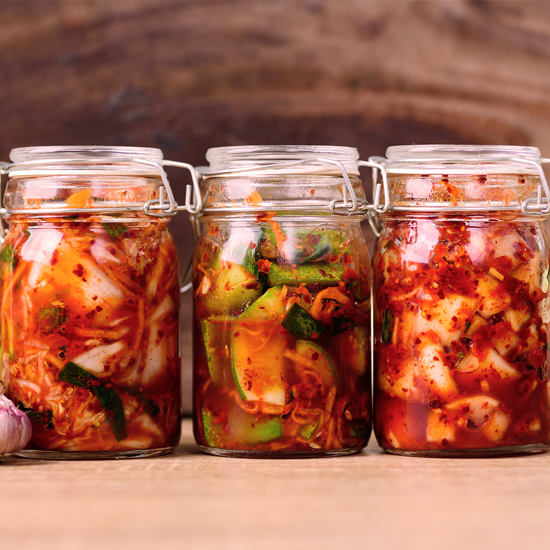
There’s something a little magical about fermentation. You take a head of cabbage, add salt, leave it on the counter, and a week later it’s transformed into something tangy, fizzy and packed with living cultures. Humans have been doing this for thousands of years — and lately, fermented foods like kimchi, kombucha and sauerkraut are having a serious moment in American kitchens.
So what’s the deal? Are these probiotic-rich foods actually good for you? Should you make them yourself? Let’s dig in.
Why fermented foods are so popular right now
Fermented foods are enjoying a major comeback.
The buzz isn’t just marketing. A 2021 Stanford School of Medicine study found that adults who ate a diet rich in fermented foods — think yogurt, kefir, kombucha, kimchi and sauerkraut — for 10 weeks had measurably more diverse gut microbiomes and lower levels of inflammatory proteins in their blood. More microbial diversity is associated with better digestion, stronger immune function and reduced risk of chronic disease.
The science, simplified
Fermentation is what happens when beneficial microbes (mostly bacteria and yeasts) break down sugars and starches in food, producing acids, gases and sometimes a little alcohol along the way.
A 2022 review in the journal Nutrients summed it up nicely: fermented foods can affect the gut microbiome both short and long term, and “should be considered an important element of the human diet.”
Three great ferments to try at home
If you’re new to this, here are three popular projects, ranked easy to slightly trickier:
- Sauerkraut. All you need is cabbage, salt and a clean glass jar. Shred the cabbage, massage in about 2 percent salt by weight, pack it tightly under its own brine, and let it bubble away on the counter for 1 to 4 weeks. Taste as you go.
- Kimchi. Korean kimchi adds napa cabbage, garlic, ginger, gochugaru (Korean chili flakes) and often a little fish sauce. The technique is similar to sauerkraut, but the flavor profile is dramatically more complex. Plan for 3 to 7 days of fermentation, then move it to the fridge.
- Kombucha. Brew sweet tea, add a SCOBY (Symbiotic Culture of Bacteria and Yeast) and starter liquid, cover with a breathable cloth, and let it ferment 7 to 14 days. Bottle it for a second fermentation to build carbonation. It takes a bit more patience and equipment, but homemade kombucha is genuinely delicious — and a fraction of the price of store-bought.
Should you DIY? The honest pros and cons
Pros:
- Way cheaper than store-bought (a head of cabbage makes a quart of sauerkraut for about $3)
- You control the salt, sugar, spice and ingredients
- It’s surprisingly fun and a little addictive
- Live cultures are at peak freshness
Cons:
- It takes patience — most ferments need days or weeks
- Your kitchen will smell. Sometimes a lot.
- Kombucha in particular needs care — improperly brewed batches have been linked to rare cases of illness
Safety basics
Fermentation is generally very safe because the acidic environment naturally suppresses harmful bacteria. That said, follow a few rules:
- Use clean equipment and glass (not reactive metal) jars
- Keep vegetables fully submerged under brine
- Stick to tested recipes, especially when starting out
- Trust your senses: if it smells truly off, looks moldy or seems wrong, toss it
- For kombucha, watch for mold on the SCOBY and avoid ceramic vessels with lead glaze
If you’re pregnant, immunocompromised or have a chronic health condition, talk to your doctor before adding lots of fermented foods to your diet.
What about you — have you tried fermenting at home? Any favorite recipes or tips for beginners? Share them with the Shop Talk community — we’d love to hear what’s bubbling in your kitchen!
Did you know?
Older than the pyramids
Researchers estimate fermentation has been part of the human diet for nearly 10,000 years — predating the construction of the Egyptian pyramids. It’s one of humanity’s oldest food technologies.
No thanks .. even though I do have the kitchen space — I’ve been in these nations where these items are the cultural favorites — and I’m not someone who will ever consume this at all.
Not to say I don’t pickle (Yes, I do — including home canning), I make homemade jams/jellies and I also do a lot of flash freeze then use the results in such as stews, soups, etc.
(Each of these is a lot more edible overall — still healthy)
Just pointing out the obvious — some things are just not able to really tolerate on a sensitive digestive tract (and yes, such as Sauerkraut and Kimchi have both caused me problems).
Will be trying cabbage. Sounds good. Good read.
I have been involved in doing some fermenting of cabbage with my cousin’s neighbor. I must say that the results of fermenting the cabbage were truly worth the efforts taken to get the job done. I would not handle the job on my own. I prefer to work with someone who has the experience and really enjoys spending time working with this process. I enjoyed the opportunity to participate with her and to enjoy the finished product.
And space it takes up is not worth the effort.Not if you have a small reside ce. The smell
I might have try this out.